StarWeaving
Introduction
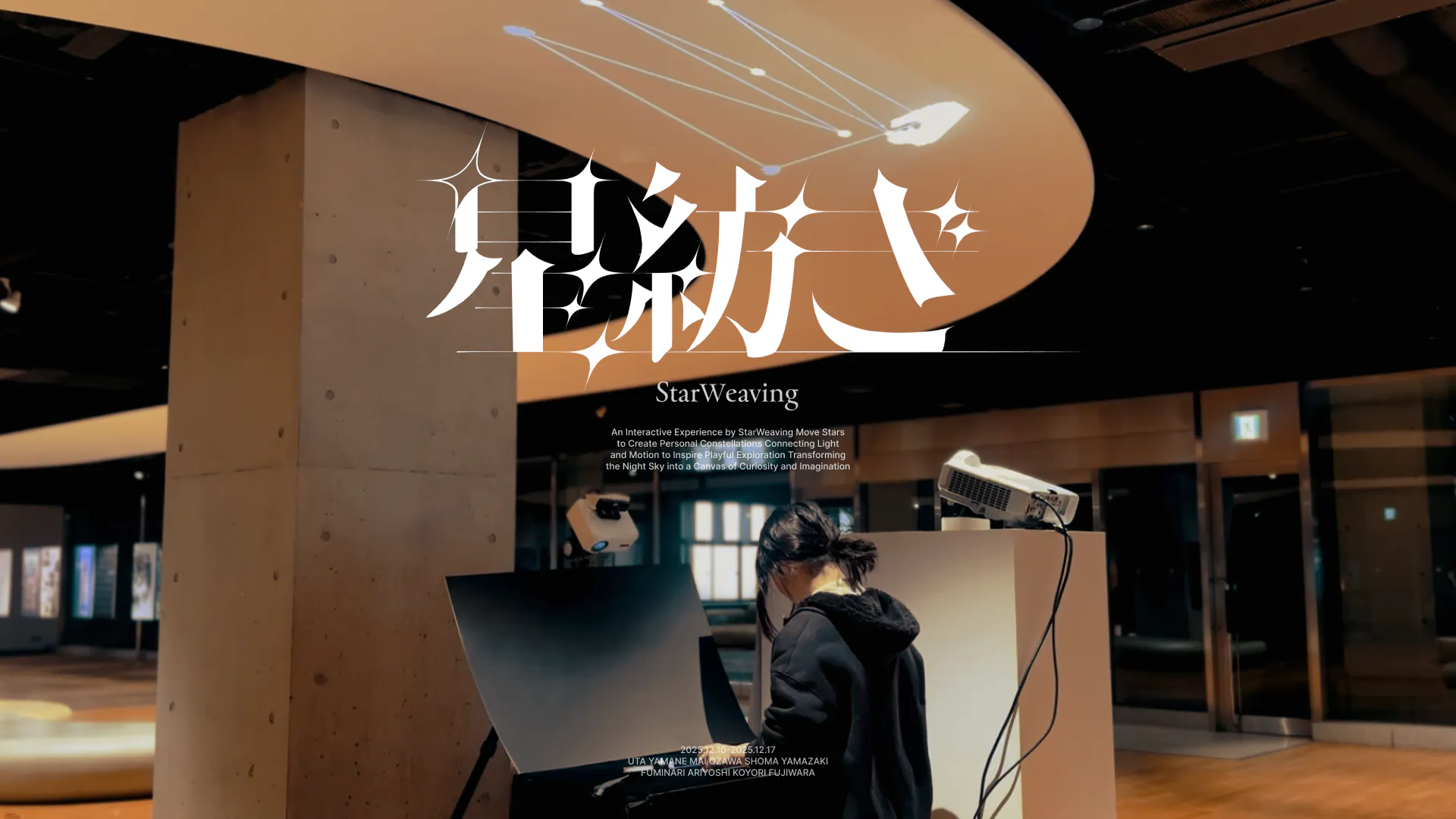
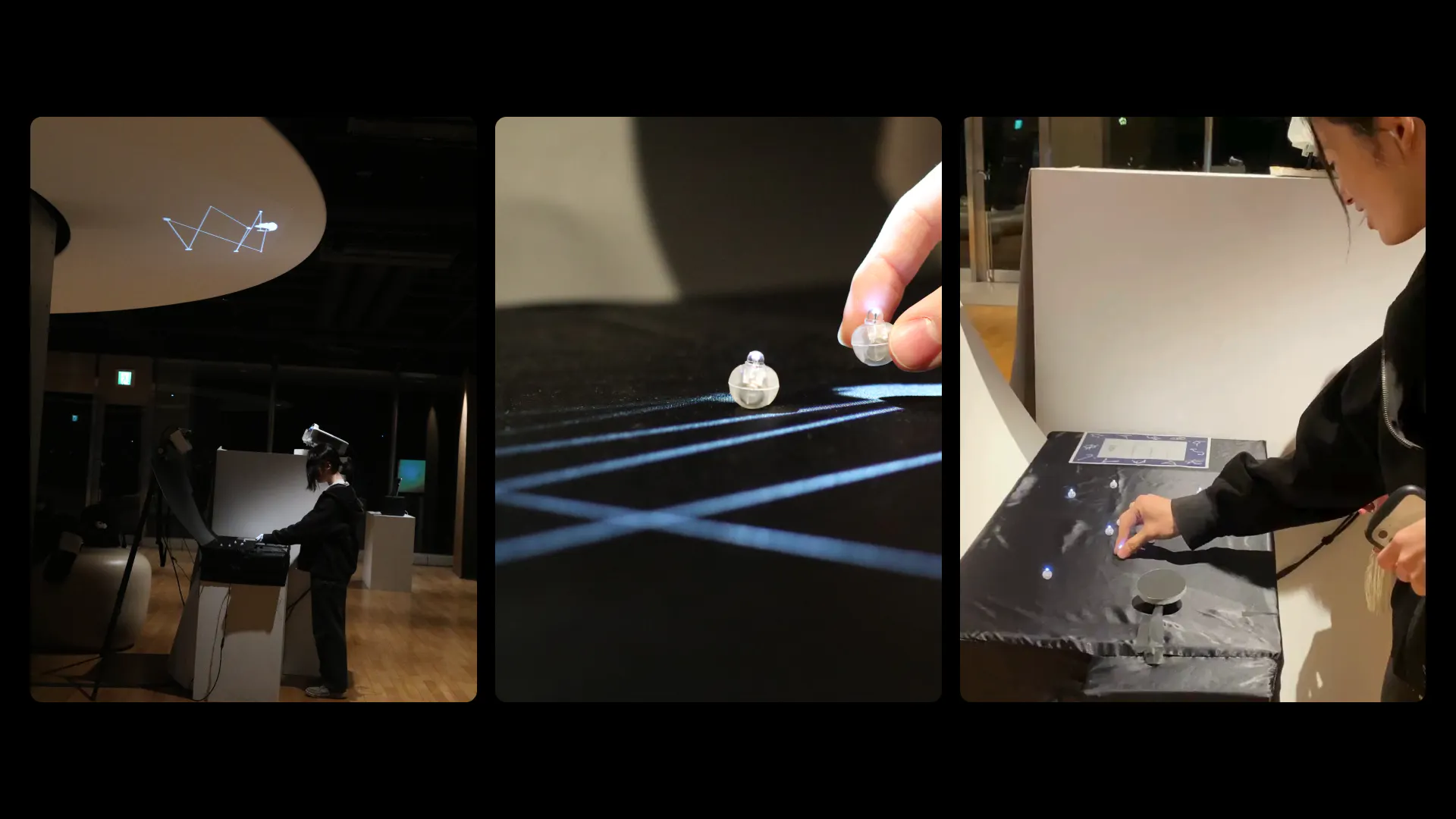
StarWeaving is an interactive exhibition project presented at Musashino Art University. Participants experience the act of creating constellations — arranging and manipulating stars.
Since ancient times, humans have been drawn to things beyond their reach — the deep sea, the cosmos — filled with curiosity and longing. By offering the unusual experience of manipulating stars and constellations, the project aims to awaken that curiosity toward the unreachable.
The project was developed by a group of five over the course of one month, covering concept planning, programming, exhibition design, and final editing.
I was mainly responsible for coding, editing, and a project coordination, enduring smooth collaboration between team members.
Core Value
1 Playfulness
Firstly, we valued playfulness. We've thought this interaction should be playful, because the key is to be able to control what we cannot control on the project. So, we took care of smoothness of this interaction and had checked it everyday while an exhibition.
2 Curiosity
Secondly, curiosity should be sparked. Throughout the process of developing the concept, curiosity was always valued. As an exhibition, we thought the interaction should look interesting, and instinctively spark human curiosity. For this reason, this interaction was designed to provide an unusual experience.
3 Impact
Impact was also essential to encourage visitors to engage with the interaction. We had 8 groups in the same exhibition and another exhibition was hosted at the same place. To stand out, a strong hook, and impact was needed. So, we took advantage of the ceiling and projected the visuals on the ceiling. This strategy worked extremely well, prompting many people to stop and show immediate interest.
Timeline
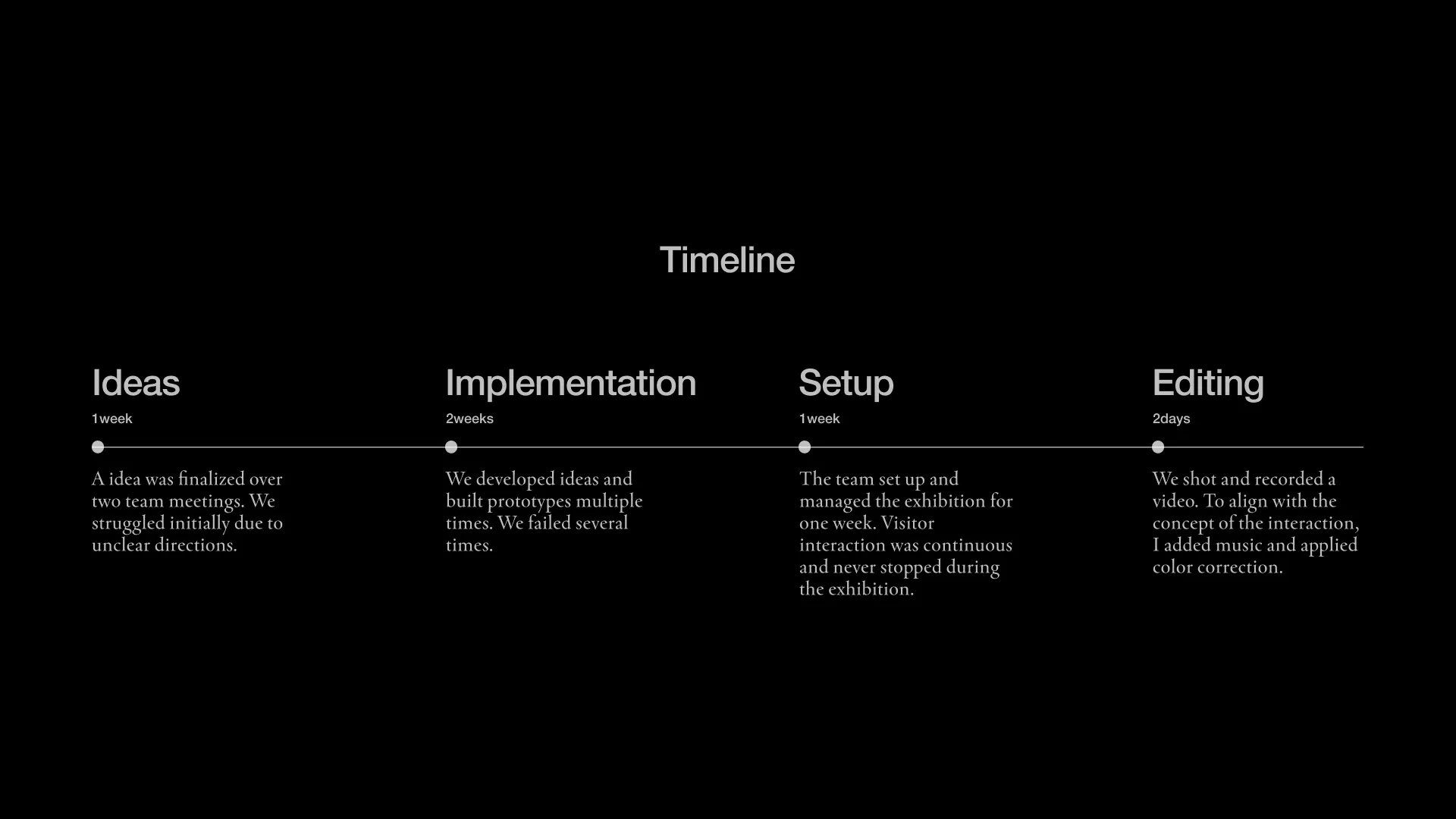
At first, we set a timeline to finish the design by the deadline.
Ideas Overview
Through two ideation meetings, we narrowed down three promising ideas. The final work was grounded in ideaC.
While meetings, we spent over five hours, because our discussions were driven by methodology-driven rather than conceptual clarity. As a result, we ended up getting stuck, then consulted our professors. Once consulting, we move forward on the right track.

Implementation
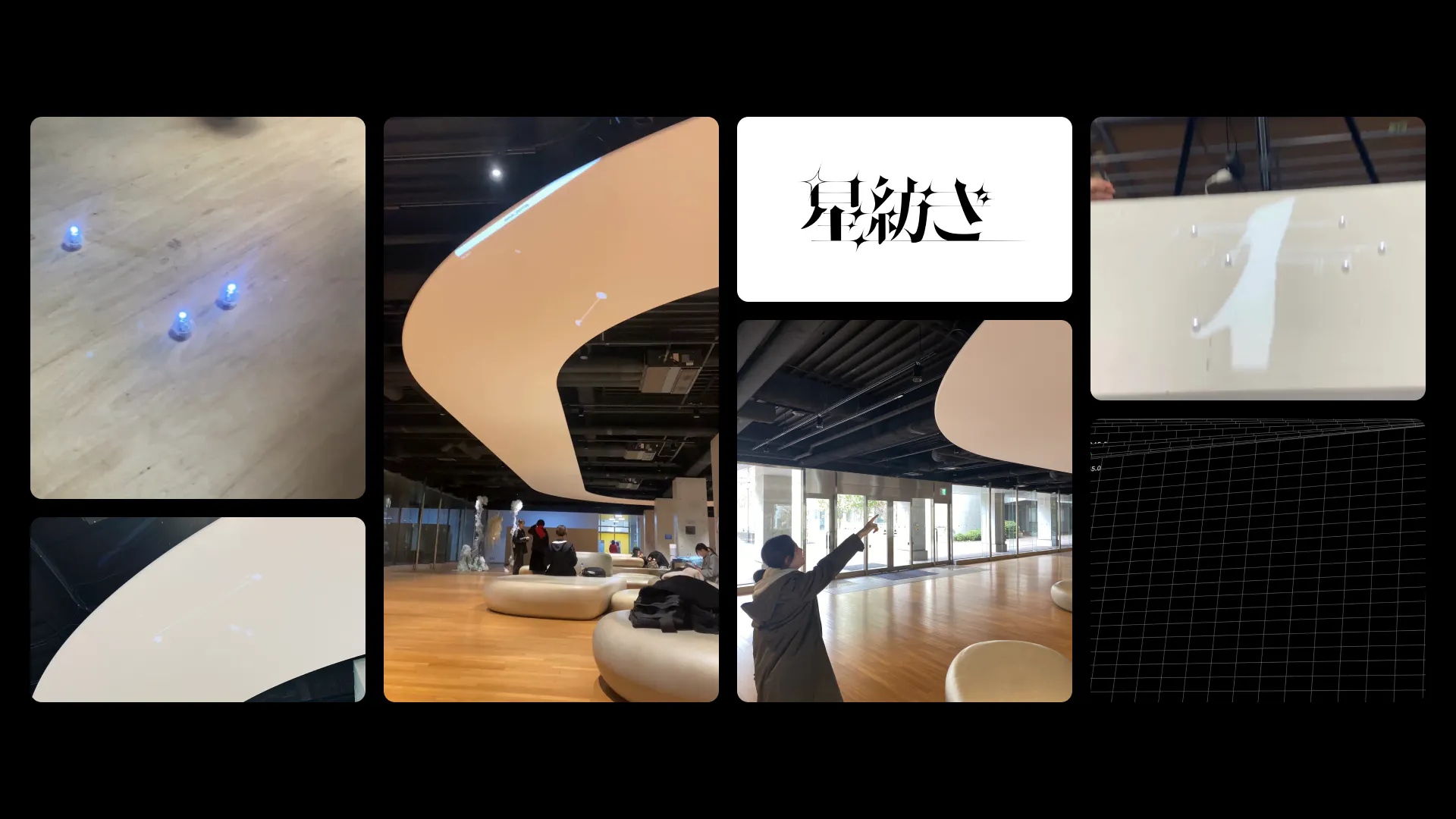
We built and iterated on prototypes over two weeks, experiencing multiple failures as a team. I was mainly responsible for coding, and project coordination. Other team members designed a logo, a poster, effects, and how to set up.
Setup
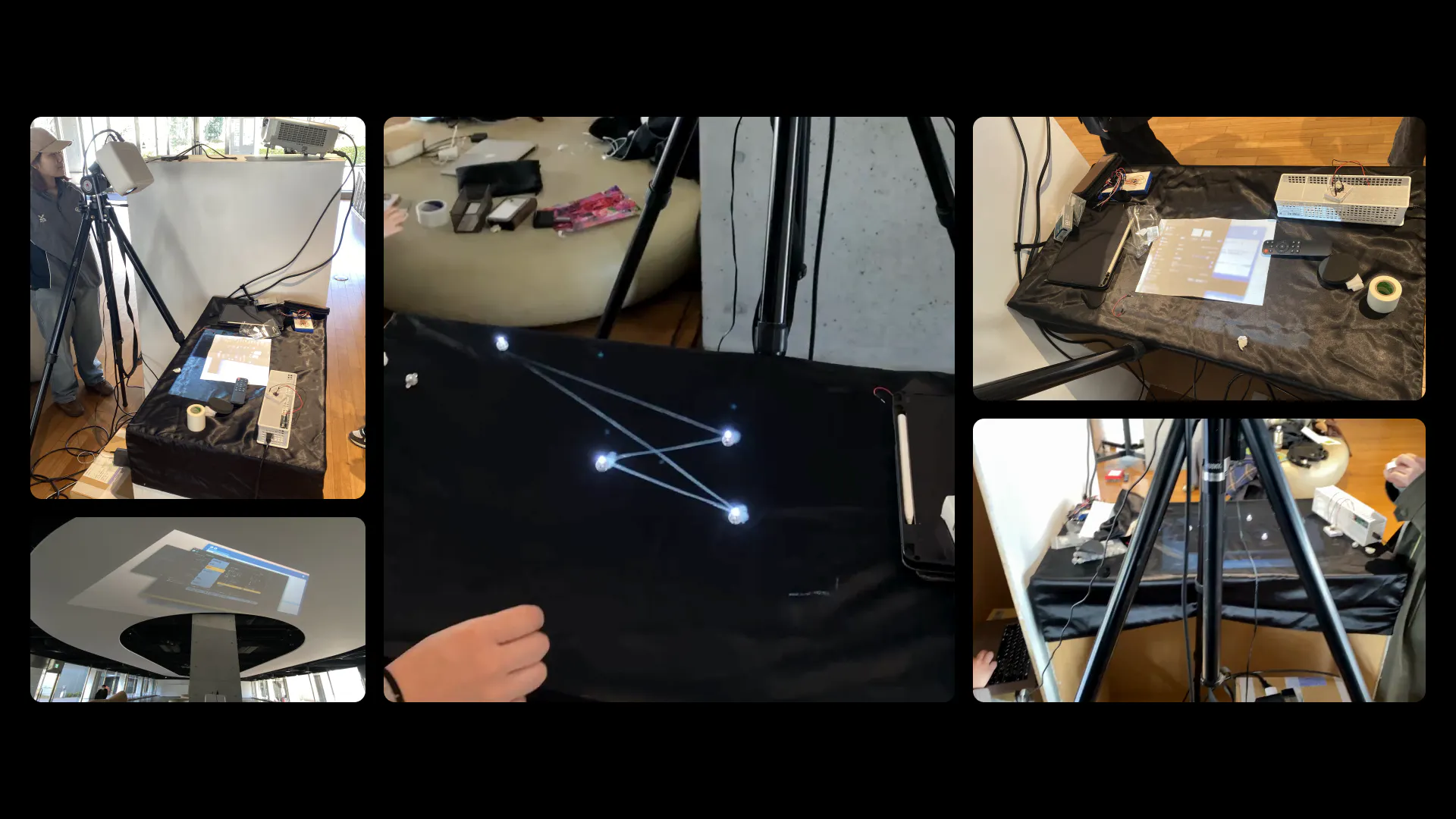
We completed the setup in one day. We encountered several unexpected issues, but solved them on the spot. To maintain a clean visual experience, one member sewed custom fabric covers for the devices.
Exhibition
Throughout the one-week exhibition, we managed the interaction daily, and it remained continuous. Each morning, a team member handled the setup.
Color Correction and Light Adjustment
Recognition
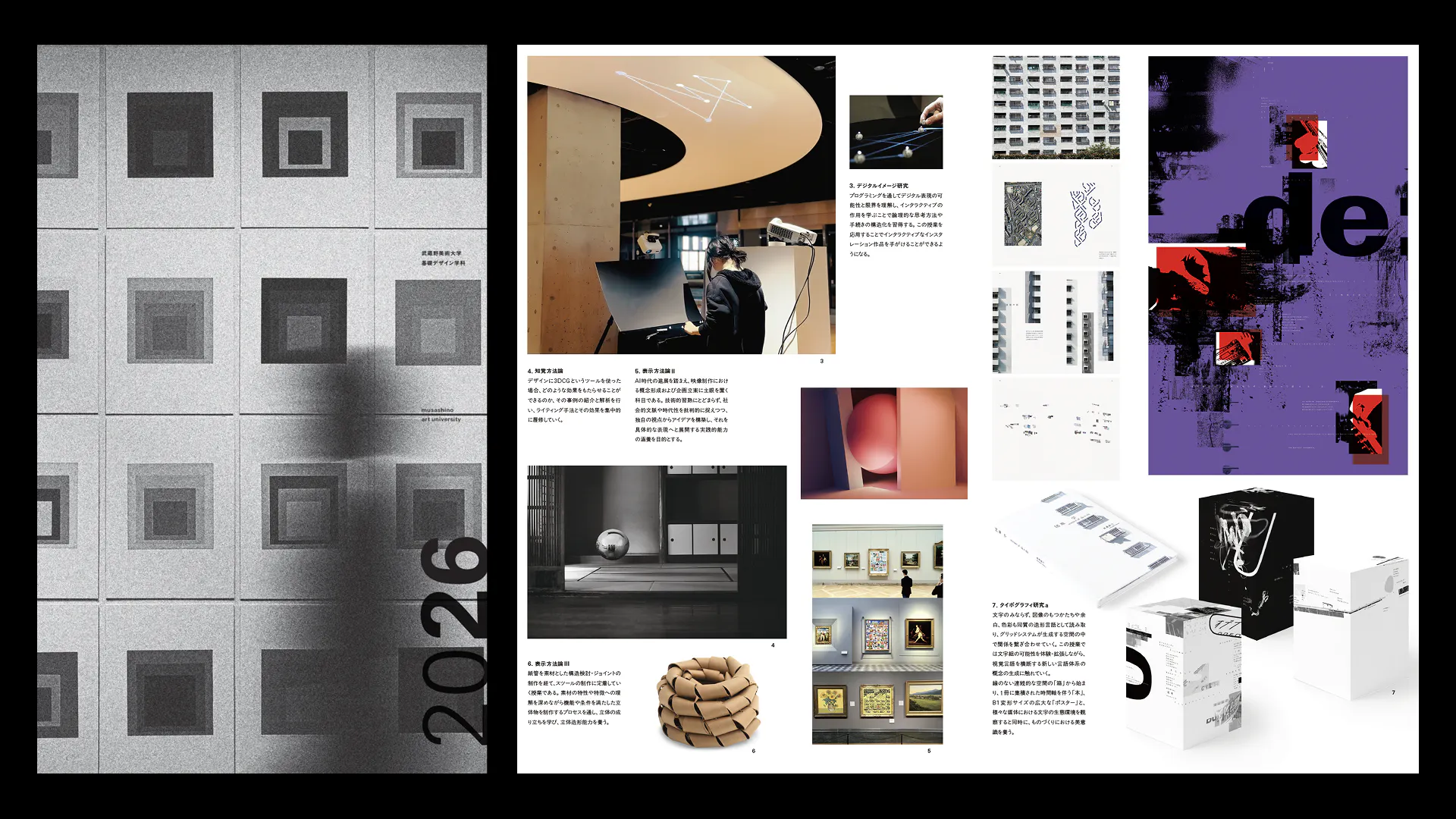
Featured in the 2026 Department Introduction Pamphlet.